


I'm finally finished with the IIC competition! What a relief. I'm glad I decided to participate in the competition, but I am also glad that it is no longer hanging over my head. I had awesome group members, and we worked really well together. We worked hard and long, especially on our video, but now we have something to be proud of.
Check out our video pitch about using Diigo and Mindmeister to teach the persuasive essay.
Monday, March 22, 2010

Monday, March 15, 2010
My Storyboard
It was a little difficult getting pictures for the storyboard because most of the video (for the competition) will be our group explaining what we have done for our submission. I am hoping that we can make our video pitch more interesting with relevant pictures, and I think it will be helpful to show how we are actually using technology by including a demonstration in the video.
I have posted my storyboard to google docs.
We are still working out a few details, so the script will change a little bit. This is a good overview of what will be in our video, and we will smooth everything out in the next couple of days.
I have posted my storyboard to google docs.
We are still working out a few details, so the script will change a little bit. This is a good overview of what will be in our video, and we will smooth everything out in the next couple of days.
Monday, March 8, 2010
Weekly Participation
I have not completed my copyright assignment yet because I have been working on my project for the competition.
However, I have still been participating in learning new technology. For another class, I am starting to learn Photoshop. I've always been terrified of working with Photoshop, and even more so after I tried to learn it last semester and failed miserably.
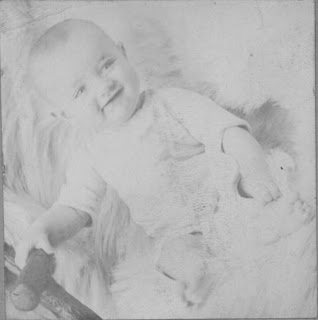
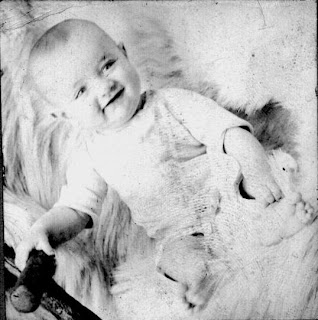
This semester, I am learning it better, but I am still a beginner. Here is a before and after picture (but like I said, I am still learning, so the photograph has not been fixed as well as other people could have done it--but it's a good start for me).
However, I have still been participating in learning new technology. For another class, I am starting to learn Photoshop. I've always been terrified of working with Photoshop, and even more so after I tried to learn it last semester and failed miserably.
This semester, I am learning it better, but I am still a beginner. Here is a before and after picture (but like I said, I am still learning, so the photograph has not been fixed as well as other people could have done it--but it's a good start for me).


Monday, March 1, 2010
My Artifact (Technology Lesson Plan)
I set up a Diigo account for myself so that I could do my own lesson plan from a student's point of view. I chose an example persuasive essay and used Diigo to mark specific points in an article. I used the sticky notes to identify the thesis, the main topics for each paragraph, and the opposing argument according to the handout that was mentioned in my last blog post (my lesson plan).
I am participating in the McKay School competition, so I will continue to develop my lesson plan. As I mentioned in my blog post about my lesson plan proposal, I will also be using mind mapping to teach persuasive writing. My lesson plan uses Diigo to introduce the mini unit on persuasive writing. This first lesson plan requires students to do something similar to this assignment. Later lessons will require students to use mind mapping in the ways I mentioned previously.
Here are some screen shots of my Diigo page.


Monday, February 22, 2010
My Lesson Plan
In my proposal, I talked about using mind mapping in my lessons. This particular lesson, the introduction to writing a persuasive essay, uses Diigo. Later lessons will use mind mapping to help students with drafting and organization.
This lesson uses Diigo to help students analyze several models so that they will go into writing the assignment with a better idea of how they should write.
Here is my lesson plan:
Planning
Title/Subject of Lesson: Introduction to the Persuasive Essay
Class and Grade Level: 7th Grade English
Objective(s): Students will be able to identify the characteristics of a good persuasive essay in several online examples using Diigo.
State Core Objectives Met by this Lesson:Consider audience and purpose for an extended piece of writing
Concept(s) to Be Taught:Characteristics of a good persuasive essay (clear purpose/thesis, address opposing argument, topic sentences for each point, supporting evidence)
Materials Needed:
Argumentation essay outline handout
Computer lab (Diigo)
Projector
Strategies to be Used:
Modeling—demonstration with the class (on projector)
Group “discussion”—small groups (3 or 4)—group will be assigned to certain articles and will use Diigo to point out things that they notice
Class discussion—go over what the groups have discussed
Individual practice
Performing
Continuation from Previous Lesson: This is the introduction to this unit.
Lesson Presentation: This lesson should take place in the computer lab.
A. Preparing for Learning
Present the students with a hypothetical situation that involves a decision they would disagree with. Ask them to persuade you not to make that decision. As they try to persuade you, bring up counterarguments. (Still thinking of a good scenario).
B. Directing the Learning
Pass out handout to the class (the handout outlines the basic structure of a good persuasive/ argumentative essay). Help students apply the arguments about the hypothetical situation to the handout. Discuss how students needed to take a side (thesis), address the opposing arguments, and give their own arguments. Discuss what might have made their arguments stronger (evidence).
Use the projector at the front of the class to bring up a model persuasive essay/article. Have students follow along on their own computers. Point out the parts of the article that follow the points on the handout.
Divide students into groups and assign each group to work on one article/essay. Have them make comments on the articles using Diigo.
Get back together as a class and discuss each group assignment together.
C. Reinforcing the Learning
Have students return to the first class discussion (the one about the hypothetical scenario). Have student write a quick outline of the their arguments according to the handout.
Assignment:
Have students analyze another example essay for homework.
Tuesday, February 16, 2010
Competition Ideas: Mind Mapping

My group and I have decided to do something with mind mapping for our innovative instruction competition. We decided that mind mapping can be useful in several stages of the writing process.
First, it would be useful in helping the class as a whole brainstorm ideas for writing about a certain topic. I know that when I write, it helps me to listen to others' ideas before I get started. Those ideas will usually tip something off in my own mind and just get me started in the right direction. For this part of the assignment, we could use a class mind map that everyone can post on.
Second, a mind mapping exercise would be helpful in gathering more details and more ideas for individuals. We decided that for this part of the activity, students will create their own mind maps and gather pictures that somehow illustrate the different points in their map. The pictures will give students a different perspective on what they are writing and will help them see the issue from different angles.
My group members and I did a similar assignment (but on paper) for another class, and we found that it was helpful. We were first required to write for a certain amount of time in answer to a prompt. We then had to cut out pictures from a magazine and make a collage representing what we had written. After doing the collage, we had to write about what the collage meant. I was skeptical and thought my second paper would be nearly identical to my first. However, the collage activity really did help. I was able to write in a lot more detail about the topic, and my second essay turned out to be much better than my first.
My group and I also thought of a third way of using the mind map. After students have written their essays, they can use a mind map to do a reverse outline of their essay. A reverse outline may seem pointless, but it too is very helpful. Often, students will think their essays are organized and flow well--but that is usually because they have all the information in their heads. They do not realize that the way they put it all on paper does not make sense. A reverse outline will show students if their essays really follow the organization they think it does. This strategy has helped me several times. I think my essay is good, but when I go back, I realize that it is not organized and is confusing to read.
I don't know how narrow our lesson plan has to be, but I would like to show how mind mapping can be used from three different angles.
Monday, February 8, 2010
My Classroom Website
So I finally finished my classroom website. Last semester, I made several lesson plans as if I were teaching The Sun Also Rises to my hypothetical class, so I decided to use those lesson plans to build my website for this month.
Here is the link to my website: http://sites.google.com/site/mrsbauersawesomeenglishclass/assignments
Again, I procrastinated doing this website until the last possible minute, and again, I discovered that it was not as scary as I anticipated. My father, who is a veterinarian, would tell me, "Even rats can learn." Maybe one day I too will learn.
Subscribe to:
Posts (Atom)